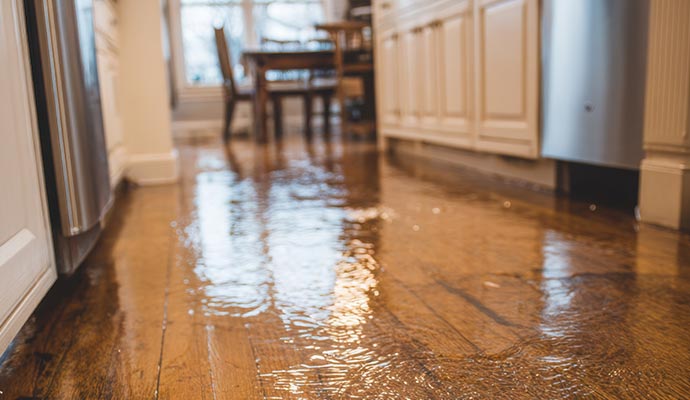
A wet spot on the floor is rarely the whole story. Water travels. It runs along framing, soaks into insulation, wicks up drywall and slips under flooring, and by the time you notice a stain or a soft spot, it has usually spread much farther than it looks. That's why professional moisture detection is one of the most important parts of any water damage job. At BlueX Restoration, it's the first thing we do on every leak, flood and mold call in Vancouver and across Clark County.
Why hidden water damage is so common here
The Pacific Northwest is wet for most of the year. Long rainy seasons test every roof, gutter, window and foundation, and many Vancouver homes sit over crawl spaces that stay damp from fall through spring. Add older plumbing, aging water heaters and the occasional cold snap that splits pipes, and you have plenty of ways for water to get somewhere it shouldn't without anyone seeing it happen.
Because the air here is cool and damp so much of the time, wet materials don't dry out on their own very quickly. Water that would evaporate in a few days somewhere drier can sit inside a wall or under a floor here for weeks. That gives mold time to start and gives wood time to soften and rot.
Signs you may have hidden moisture
Watch for stains on ceilings or walls that grow over time, paint that bubbles or peels, baseboards that swell or pull away from the wall and flooring that feels soft, cups up at the edges or starts to separate. A musty smell is another clue, especially in closets, bathrooms, basements and rooms over a crawl space. Unexplained higher water bills can point to a leak you can't see.
None of these signs tells you exactly where the water is coming from or how far it has spread. That's where moisture detection comes in.
Moisture meters: measuring what you can't see
A moisture meter measures how much water is in a building material. Pin meters push two small probes into wood or drywall and read the moisture between them. Pinless meters use a sensor pad that reads below the surface without leaving holes, which is useful for finished floors, tile and cabinets. We take readings in the area that looks wet and keep going outward until the numbers return to normal. That outline becomes the map for the whole drying plan.
Readings only mean something when they're compared to a dry reference. Different materials hold different amounts of moisture, so we take readings from a dry, unaffected part of the same home and compare. That tells us whether a reading is truly wet or just normal for that material.
Thermal imaging: seeing temperature differences
A thermal imaging camera shows surface temperatures as colors. Wet materials are usually cooler than dry ones because evaporation pulls heat away, so damp areas often show up as darker or bluer patches on the screen. On a recent ceiling job, the thermal camera showed the cold outline of water spreading across the framing long before the drywall looked stained.
It's important to understand what a thermal camera can and can't do. It doesn't see through walls and it doesn't measure moisture directly. A cool spot can also come from a cold window, missing insulation or an air leak. We use thermal imaging to find suspicious areas quickly, then we confirm every one with a moisture meter before making decisions.
Hygrometers and the air around the damage
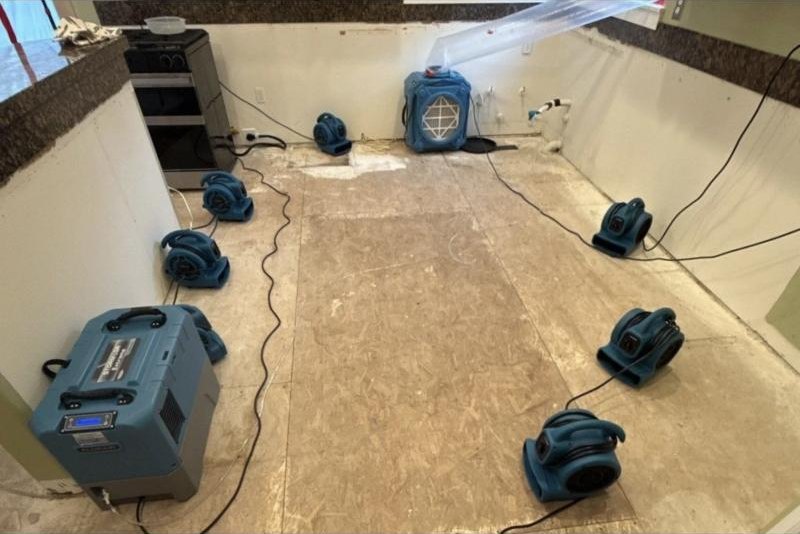
We also measure temperature and humidity in the air. Those readings tell us how much moisture the air can still absorb and how well the drying equipment is working. They help us decide how many dehumidifiers and air movers a room needs and whether the setup should change as the job moves along.
Why checking every day matters
Drying isn't a one time visit. Once the equipment is running, we come back and take readings every day. The numbers should drop steadily as the structure dries. If one area isn't improving, it might need more airflow, a different dehumidifier, or for a section of drywall or baseboard to come off so air can reach the wet framing behind it. We only call a job dry when the readings match the dry reference, not when the surface looks and feels dry.
This daily record is also useful for your insurance claim. It shows where the water was, how the drying progressed and when the structure reached normal levels, which gives your adjuster clear, documented information.
Where we find hidden water most often in Vancouver homes
Under kitchen and bathroom sinks, behind dishwashers and refrigerators with ice makers, around toilets and tubs, inside walls next to showers, around water heaters and laundry rooms, in attics below roof leaks and in crawl spaces. Crawl spaces deserve special mention. Water from a leak upstairs can drain through the subfloor and soak the insulation and vapor barrier below, where nobody sees it until it starts to smell.
Moisture detection and mold
Mold needs moisture to grow. Finding and drying the water is the only way to keep mold from coming back after it's cleaned up. When we handle mold remediation, we start by tracking down the moisture source with meters and thermal imaging. If you remove mold without fixing the water problem behind it, it usually returns. A musty smell alone can't tell you whether mold is present or where it is, which is another reason a careful inspection matters.
For general guidance on mold and moisture in homes, the EPA's brief guide to mold, moisture and your home is a good place to start.
What moisture detection can't do
Moisture detection is an investigation, not a guarantee that every hidden area has been found. Some spaces, like the inside of a wall behind tile or the cavity under a tub, can be hard to reach without opening them up. When readings suggest a problem in a spot we can't measure directly, we'll explain what we're seeing and talk through the options with you before removing anything.
When to call a professional
Call for help if you've had any leak that reached walls, floors or ceilings, if you notice stains or soft spots that keep growing, or if a room smells musty and you can't figure out why. It's also smart to get readings after a burst pipe even if the water seems to be gone. Our guide on what to do first after a burst pipe explains the steps to take right after a leak.
Businesses benefit from moisture checks too. Offices, retail spaces, rental units and apartment buildings often have leaks that travel between suites or floors before anyone reports them. A quick set of readings can show property managers exactly which units are affected, so drying and repairs stay focused and tenants are disrupted as little as possible.
Moisture inspections from BlueX Restoration in Vancouver, WA
BlueX Restoration is a local, family owned company that provides water damage restoration in Vancouver, WA, mold remediation, asbestos abatement and reconstruction for homes and businesses across Clark County and Portland. We bring moisture meters and thermal imaging to every inspection, explain what the readings mean in plain language and give you a clear plan before any work starts. Call (360) 970-0619 any time, day or night, or request a free inspection online. We'll find the water, dry it properly and help you put your home back together.