Why a sink overflow deserves a fast response
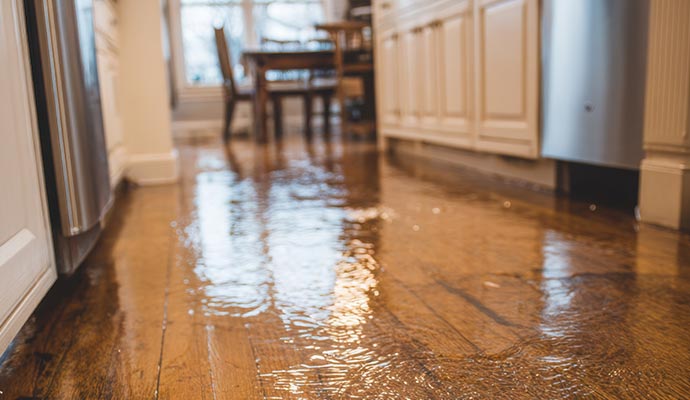
A kitchen or bathroom sink overflow can look like a small mess that a few towels will handle. The water on the counter and floor is only part of the story. Water runs down the cabinet face, soaks into the cabinet base and toe kick, and slips under the flooring along the edges. Particleboard cabinet bottoms swell quickly, and once they swell, they rarely go back to normal. The faster you act, the more you can save.
Here in Vancouver, many homes sit over crawl spaces, which adds another layer to the problem. Water that gets under the flooring can drip through the subfloor and soak the insulation below, where it can stay wet for weeks in our damp climate. That's how a quick overflow turns into a musty smell and a mold problem a month later.
Stop the water first
Turn off the faucet. If the sink is still filling because of a stuck valve or a broken supply line, close the shutoff valves under the sink. If those don't work or you can't reach them, shut off the main water supply to the house. If water is near outlets, a garbage disposal or other electrical equipment, turn off power to that area at the panel if you can do it safely.
Once the water stops, figure out why it overflowed. A clogged drain, a faucet left running, a failed dishwasher drain line or a cracked supply line all need a different fix, and you don't want it happening again tomorrow.
Clean up what you can see
Mop and towel up standing water on the counter and floor. Empty the cabinet under the sink and set everything somewhere dry. Wipe out the inside of the cabinet, and leave the doors open so air can move. Pull back any rugs or mats and let them dry separately. If the water came from a backed up drain, wear gloves and treat it as contaminated, since drain water can carry bacteria.
Take photos of everything before you move or throw anything away. Pictures of the wet floor, the cabinet and the source of the overflow will help if you decide to file an insurance claim.
Check the places water hides
Press on the cabinet floor. If it feels soft or looks swollen, water got into the particleboard. Look at the toe kick, the strip of wood at the bottom of the cabinet facing the floor. Check the edges of the flooring for cupping, gaps or lifting. Laminate and vinyl plank floors can trap water underneath while the surface looks dry. Look at the wall behind the sink and along the baseboards for stains or bubbling paint.
If the kitchen or bathroom is over a basement or another room, check the ceiling below for stains or drips. If your home has a crawl space, have someone look underneath the sink area for wet insulation or water on the vapor barrier.
Why surface drying isn't enough
Fans and an open window help, but they only dry what air can reach. Water trapped under cabinets, inside the toe kick cavity, under flooring and in wall cavities stays wet much longer. Water that sits in building materials for more than 48 hours can lead to mold growth, and our damp climate slows natural drying. Getting commercial dehumidifiers and air movers running inside that window, and applying antimicrobial treatment where needed, is what keeps a wet kitchen from becoming a mold job.
How we measure and dry after an overflow
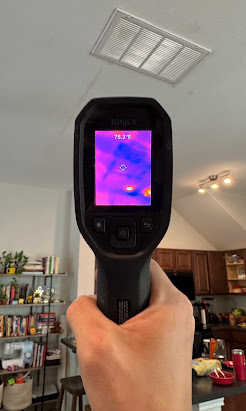
At BlueX Restoration, we start with moisture readings. We check the cabinets, flooring, walls and subfloor with moisture meters and use thermal imaging to see how far the water spread. You can read more about that process in our guide on how moisture detection finds hidden water damage. Based on the readings, we decide what can be dried in place and what needs to come out. Sometimes that means removing the toe kick or drilling small holes so air can reach the cavity under the cabinets. Sometimes the cabinet bases or flooring are too swollen to save.
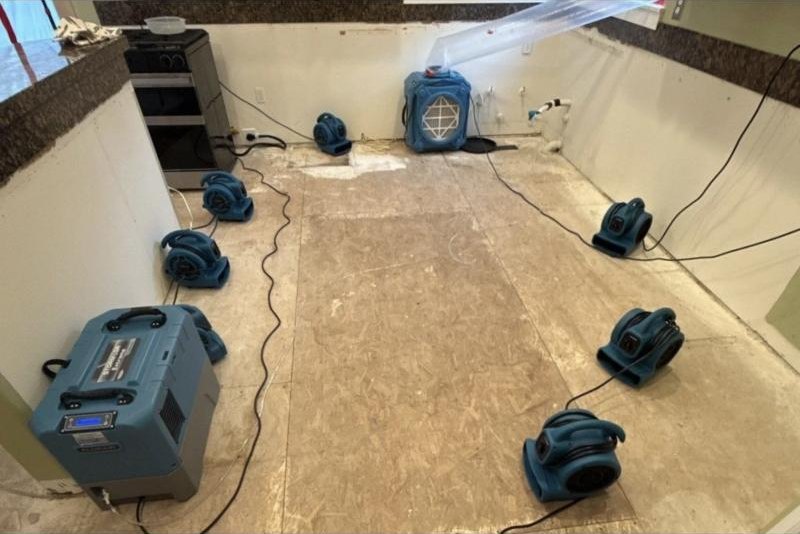
Then we set up air movers and dehumidifiers and check the readings every day until everything is back to normal. When the drying is done, you get photos and moisture records for your files and your insurance company.
What this looks like on our jobs
This is one of the most common calls we get. A clogged sink overflows with the faucet left running, and water spreads across the floor and into the cabinet bases before anyone catches it. By the time the homeowner finds it, the flooring and the bottoms of the cabinets have often swelled past saving. We pull the damaged lower cabinets and flooring, dry the space completely and then rebuild it.
Rebuilding after the drying
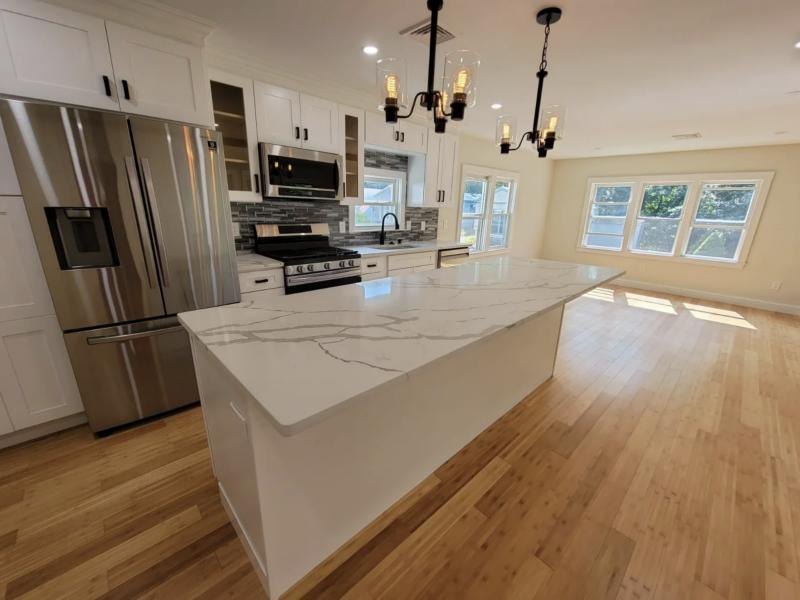
Once the kitchen or bathroom is dry, the repairs can start. BlueX Restoration's reconstruction team handles new cabinets, countertops, flooring, drywall and paint, so the same people who dried your home put it back together. Many homeowners use the opportunity to update the kitchen while the cabinets are out anyway.
Prevent the next overflow
Keep grease, food scraps and coffee grounds out of the drain, and run the disposal with plenty of cold water. Never walk away from a filling sink or tub. If a drain starts to slow down, have it cleared before it fully clogs. Check the supply lines under your sinks once a year and replace any that bulge, crack or show rust at the fittings. A small water leak detector under the sink is an inexpensive way to get an alert before the damage spreads.
Bathroom sinks deserve the same attention as kitchen sinks. A child leaving the water running, a clogged overflow hole or a cracked drain pipe under a vanity can soak the cabinet, the subfloor and the tile around the toilet. Because bathrooms already run humid, any water that gets trapped there is especially likely to grow mold if it isn't dried quickly.
Will insurance cover a sink overflow?
It depends on your policy and the cause. Many homeowners policies cover sudden and accidental water damage, such as an overflow or a burst supply line, while slow leaks and long term damage are often excluded. Your insurance company makes the final decision. Report the loss promptly, keep your photos and receipts, and ask your adjuster what documentation they need. We work directly with insurance companies and provide photos, moisture logs and a written scope.
When to call a restoration company
Call for help if water reached the floor around the cabinets, sat for more than a few hours, came from a backed up drain or reached a ceiling below. Call as well if you notice swelling, soft flooring or a musty smell in the days after the overflow, even if things looked fine at first. For larger leaks, our guide on what to do first after a burst pipe covers the next steps.
BlueX Restoration provides water damage restoration in Vancouver, WA for homes and businesses across Vancouver, Camas, Battle Ground, Ridgefield, Hazel Dell, Salmon Creek and the rest of Clark County, plus Portland. We're local, family owned and answer the phone 24/7 at (360) 970-0619. You can also request a free inspection online, and we'll help you figure out exactly what needs to be done.